Part One · The life
VII
The airlines 1979–2019
Lauda Air, founded in 1979 while he still raced; the loss of Flight 004 in 1991; then Niki and Laudamotion: 40 years of Niki Lauda’s airlines.
Racing is the opposite of flying. In racing, you want to win – there are no rules and you can do whatever you want. Flying a plane is the opposite: you respect rules and fly to the rules. You can’t possibly compare the two.

VII · The airlines
A charter airline, 1979
On 24 May 1979 two second-hand Fokker F27 turboprops, 44 seats apiece, began carrying holidaymakers from Vienna, Salzburg and other Austrian airports to Spain, Italy, Yugoslavia and Greece. They belonged to Lauda Air, and the man whose name was on them was still a Formula One driver, in his second season with Brabham.
The flying had come first. In 1977, the season of his second championship, he became the owner of a Cessna Citation business jet, his first aircraft, and began to train as a pilot. In 2010 he gave two reasons, one for the licences and one for the airline.
Die Pilotenausbildung hatte ich schon, um unabhängig zu sein von diesem ganzen Formel-1-Tross. Und in Österreich gab es damals nur die staatliche Fluglinie AUA, die hatten ein Monopol für die Langstrecke. Das musste ja irgendwer aufbrechen.
I already had my pilot’s training, so as to be independent of the whole Formula One circus. And in Austria at the time there was only the state airline AUA, which had a monopoly on long-haul. Somebody had to break it open.
He founded Lauda Air in April 1979, in partnership with the travel company ITAS, by buying the charter licence of a small company called Alpair. The day of the founding is given as the 4th by some accounts and the 23rd by others.1 The founding is often placed after his retirement, but it came first: the airline was flying by the end of May, and he did not walk out of Formula One until September, in practice for the Canadian Grand Prix at Montreal, an exit told in the chapter on his retirements.
The airline stayed small. Pressure from the state carrier, Austrian Airlines (AUA), saw to that, and in early 1983 the F27s were retired. From 1983 to 1985 Lauda Air lived on business-jet charter, with a Cessna Citation, a Dassault Falcon 20 and a Learjet 36A. By then its founder was racing again, for McLaren from 1982, and on his way to a third title.
VII · The airlines
Against the monopoly
He stopped racing for good after the Australian Grand Prix at Adelaide on 3 November 1985, the last race of the 1985 season, and went back to his airline. Late in 1985 Lauda Air resumed regular flights with jets, again in partnership with ITAS, the tour operator of Basile Varvaressos; which jets came first is disputed, two BAC One-Elevens leased from Tarom in one account, two Boeing 737s in another.2 Boeing 737-200s and 737-300s joined the fleet between 1986 and 1988, and in 1986 the airline applied for a licence to fly scheduled services.
Its aircraft carried names. Two of the 737s were named “Wolfgang Amadeus Mozart” and “Bob Marley”, names that later aircraft took over; the first Boeing 767-300ER, OE-LAU, which arrived for the summer of 1988, was “Johann Strauß”. In 1999 a 767 named after Frank Sinatra was sent on a 12-day tour of the world.
With the 767s came long-haul routes. In May 1988 Lauda Air began scheduled flights to Bangkok, Hong Kong and Sydney. By his own account, given in 2010, the licence had taken him all the way to Austria’s supreme court, and the authorities then sat on his papers for so long that on the day before the first flight to Australia he still had no traffic rights, but already had hundreds of passengers booked. He rang Australia and said he was coming anyway. He flew the Bangkok–Sydney leg himself and was met in Sydney by a band and the cameras, and said straight away that three world titles were easier to win than traffic rights to Australia. It got a big laugh and, he said, was great marketing, even though it had come about by chance. No contemporary report of the day has been found to set beside his telling.
The monopoly gave way in 1990. In June of that year Lauda Air was floated on the Vienna stock exchange; on 23 August it was granted a licence for scheduled flights worldwide, which until then only AUA had held; in the autumn Condor, Lufthansa’s holiday airline, took about a quarter of the shares. Lauda Air was now Austria’s second scheduled airline, and as a rule its founder also flew its aircraft as a pilot. Among its 767s was OE-LAV, delivered new on 16 October 1989 and named “Mozart”.
VII · The airlines
On the night of 26 May 1991 Lauda Air Flight NG 004, the scheduled service from Hong Kong to Vienna, took off from Don Muang airport in Bangkok a little after eleven o’clock local time. The aircraft was the Boeing 767 OE-LAV. About a quarter of an hour later it disappeared from radar. It came down in mountainous jungle in Suphan Buri province, about 94 nautical miles (some 175 km) north-west of Bangkok. All 213 passengers and the 10 members of the crew, 223 people, were killed.
The investigation was led by Thailand’s Aircraft Accident Investigation Committee, with accredited representatives from Austria and the United States. Its report, dated 21 July 1993, named as the probable cause a thrust reverser on the left engine deploying in flight without any command, which led to the loss of control of the aircraft. What had made the reverser deploy was never positively identified.
You can’t imagine it. Yes, it was the worst day of my life because if I want to kill myself driving a racing car that’s entirely my business, but if more than 200 people buy a ticket on my airline and don’t come back, then that is totally unacceptable.
VII · The airlines
The finding and the fight
On 27 May, the day after the crash, Lauda told Austrian radio only that the aircraft had been flying in the direction of Austria for about 20 minutes, that it was a year and a half old and had had no problems, and that he had no information pointing to terrorism. Then he flew to Bangkok. A week later Der Spiegel printed what he had said he would do if the fault turned out to be his own.
Ist die Boeing wegen einer Idiotie von mir abgestürzt, dann höre ich auf mit der Airline.
If the Boeing went down because of some idiocy of mine, then I’ll give up the airline.
His first public explanations did not last. In early June, after two runs he flew himself in a simulator at Gatwick with his airline’s data, he said he did not believe that the reverser alone could have brought the aircraft down. The New York Times pointed out that he had no part in the official investigation, and Der Spiegel reported that the recording from the cockpit did not bear out his first account. The voice recorder was the one recorder to survive; the flight-data recorder was destroyed.
The report, two years later, set out the sequence. Five minutes and 45 seconds after take-off an indication of a fault in the reverser system began to come on intermittently; the co-pilot read the entry in the crew’s quick-reference handbook, and the crew took it for an advisory. The danger of a reverser deploying in the climb was not known to crews at the time. At about 24,700 feet (some 7,500 metres), at climb power, the left reverser deployed.
Boeing’s own work moved faster than the report. Tests at Boeing showed that contamination of the reverser’s directional control valve could deploy it without a command, and on 15 August 1991 a telegraphic airworthiness directive deactivated the reversers on 767s. A redesign with a positive lock followed, made mandatory by a further directive, and the aircraft in service had been modified by February 1992. Some of the evidence came late: the directional control valve missing from the wreckage was handed in about nine months after the crash, in exchange for a reward. Straight after the crash many airlines had tried to reproduce the event in their training simulators, with erroneous results, the report noted; Boeing’s first engineering model, too, had suggested that the aircraft could be recovered. Revised wind-tunnel data showed that it could not, unless the crew took full corrective action within four to six seconds.
What made the air crash so upsetting was that there were these poor people who had lost their loved ones on one of my planes and it took us so long to give them a reason why. … My company had the plane crash, I felt responsible but, out of it, came discovery of the fault and the knowledge that such a problem will never happen again.
Lauda gave his own account of those months to Maurice Hamilton in 2006. His first reaction, he said, had been that if his company was responsible the airline must stop flying at once. He went to Bangkok for the funeral of the passengers who could not be identified, then to Boeing in Seattle, where he asked to fly the simulator programmed as the company believed the aircraft had behaved. Boeing refused at first, and he insisted: “Listen, this was my aeroplane, my name, my damage … so let me do it.” By his account, all 15 of his attempts to recover the aircraft failed.
When Boeing’s lawyers told him a statement would take another three months to word, he called a press conference in Seattle for the next day and challenged the company to load a 767 as Flight 004 had been loaded, deploy a reverser in the air, and take him along. Boeing then issued its statement, by his account the first in eight months to make clear that the fault lay with the manufacturer and not with the airline. No contemporary report of that press conference has been found.
The record supports the pressure he applied rather than the proof he is sometimes credited with. The reversers were out of use within three months of the crash and redesigned within a year, and the official report never named the specific cause. Nor do his two versions agree: in June 1991 he doubted that the reverser alone could explain the crash; by 2006 his account was that Boeing’s simulator had shown the aircraft could not be recovered.
The maintenance question
The report also examined the airline. It counted 13 maintenance actions on the left reverser system since August 1990, 10 of them since January 1991, in which Lauda Air’s engineers had followed Boeing’s fault-isolation manual without curing the recurring warning; Boeing’s rules allowed an aircraft to be dispatched with such a message for up to 500 hours. The committee found that the airline had not been remiss in continuing to dispatch the aircraft, and that no specific Lauda Air maintenance action had been identified as the cause of the deployment.
In January 2026 the Austrian aviation journalist Patrick Huber published a book on the flight, Lauda Air NG 004: Der letzte Flug der „Mozart“, drawing on the files of an inquiry by the Vienna public prosecutor. In Huber’s account the expert appointed by the prosecutor found that the time limit for flying with the warning had been far exceeded and that the aircraft should not have been released from January 1991; Huber argues that the crash could have been avoided. No charge was ever brought, and the matter has long been time-barred. The official finding and the prosecutor’s files, as Huber reads them, have never been tested against each other in a court.
Boeing compensated the bereaved. Victims who could not be identified were buried in Suphan Buri in September 1991, and a memorial stands at the place of the crash. At the memorial ceremonies in Bangkok Lauda took off his red cap in public; in Vienna, at his request, a service for the dead and for his staff was held in St Stephen’s Cathedral, and he attended it.
VII · The airlines
The partner, then the owner
Lauda Air flew on, and grew. Lufthansa announced a cooperation in July 1992, took 26.4 per cent in a capital increase in January 1993 and raised its stake to 39.7 per cent by September 1994. An Italian subsidiary, Lauda Air Italy, flew Boeing 767s from Milan to the Caribbean in the mid-1990s; it was later sold and flew on as Livingston. By 1997 Lauda Air had 23 aircraft with an average age of 4.3 years, serving 19 destinations in Europe and 11 further afield.
The red cap went to work with him. He kept it as an airline chief and put his staff in red caps too; by the account of his book Das dritte Leben (1996), when the brewery Gösser offered five million schillings for a green cap of its own, he turned up at the office in it and gave it up when his staff protested.
In 1994 and again in 1996 he flew relief flights for the Catholic charity Caritas to the Rwandan refugee crisis, piloting a Lauda Air aircraft at his own expense: to Bujumbura in Burundi in 1994, with medicine and food, and into Kigali in 1996. Caritas Vienna recalled his reasons when he died. “When you see these pictures you know that these are the poorest people in the world. They have almost no means of surviving on their own, so we must help them” (attributed).
The state airline he had fought became his partner. Joint flights with AUA to Rome, Milan and Nice began in June 1996, and on 12 March 1997 a strategic partnership was signed in which AUA took 36 per cent of Lauda Air, Lauda kept 30 per cent and Lufthansa 20 per cent, the rest of the shares in free float. The partnership did not hold. There was conflict in the boardroom, the accountants KPMG criticised the airline’s financial controls over its currency exposure, and the losses passed US$60 million. On 21 November 2000 Lauda resigned from the board.
He gave his own verdict four years later: “The avalanche of Austrian came down on Lauda and smashed it. I realised the cultural differences were not acceptable to me.” AUA raised its holding to 99 per cent in October 2001 and took the whole company in 2002, and the brand went with it; AUA kept Lauda Air flying under that name until March 2013, when it gave way to Austrian myHoliday. In 2004 Lauda said of the name: “I was the idiot who signed away the name.”
By then he had long been busy elsewhere. In February 2001, 11 weeks after leaving the board, he was back in Formula One at the head of Ford’s Premier Performance Division, which ran the Jaguar team: the start of his years in the paddock after racing.
VII · The airlines
Niki, 2003–2011
In November 2003 he started again. He bought 78 per cent of the Austrian subsidiary of the insolvent airline Aero Lloyd, with its two Airbus A320s, and began flying them that month; in 2004 the airline took the name Niki, sold as “flyniki”. It was a low-cost airline with free food and drink; in 2004 it had five Airbus jets and expected 960,000 passengers, and its owner was often in the captain’s seat: in 2004 he was a commercial pilot with 13,000 hours in his logbook and took command of a Niki Airbus at least twice a week.
The style was his own. The cabin crew wore silver uniforms that The Guardian likened to Star Trek’s, the sandwiches came from a leading Viennese caterer, the drinks were free, and fares started at £19.95; in November 2004 he opened a London–Vienna service with himself at the controls. He refused to sign union contracts, and an official of the Austrian pilots’ union called him tough and ruthless. Asked that year what he would call a third airline if Niki failed, he suggested his first name, Andreas, adding that nobody had ever heard of it.
The airline grew under a partner. Air Berlin bought about a quarter of Niki in 2004; on 5 July 2010 it raised its stake to 49.9 per cent for €21 million and lent €40.5 million to Lauda’s private foundation, a loan that could be converted into the remaining 50.1 per cent. In November 2011 Niki passed wholly to Air Berlin, and Lauda joined the board of the German airline; he left it in 2013. Under Air Berlin the Niki fleet grew to as many as seven Airbus A319s, 29 A320s, 14 A321s and seven Embraer 190s.

He could not leave aviation alone for long. In early 2016 he bought the Vienna business-jet operator Amira Air from the investor Ronny Pecik and renamed it Laudamotion, owned by his private foundation, the Lauda Privatstiftung; its fleet of business jets ran up to a Bombardier Global Express.
VII · The airlines
Laudamotion, 2016–2019
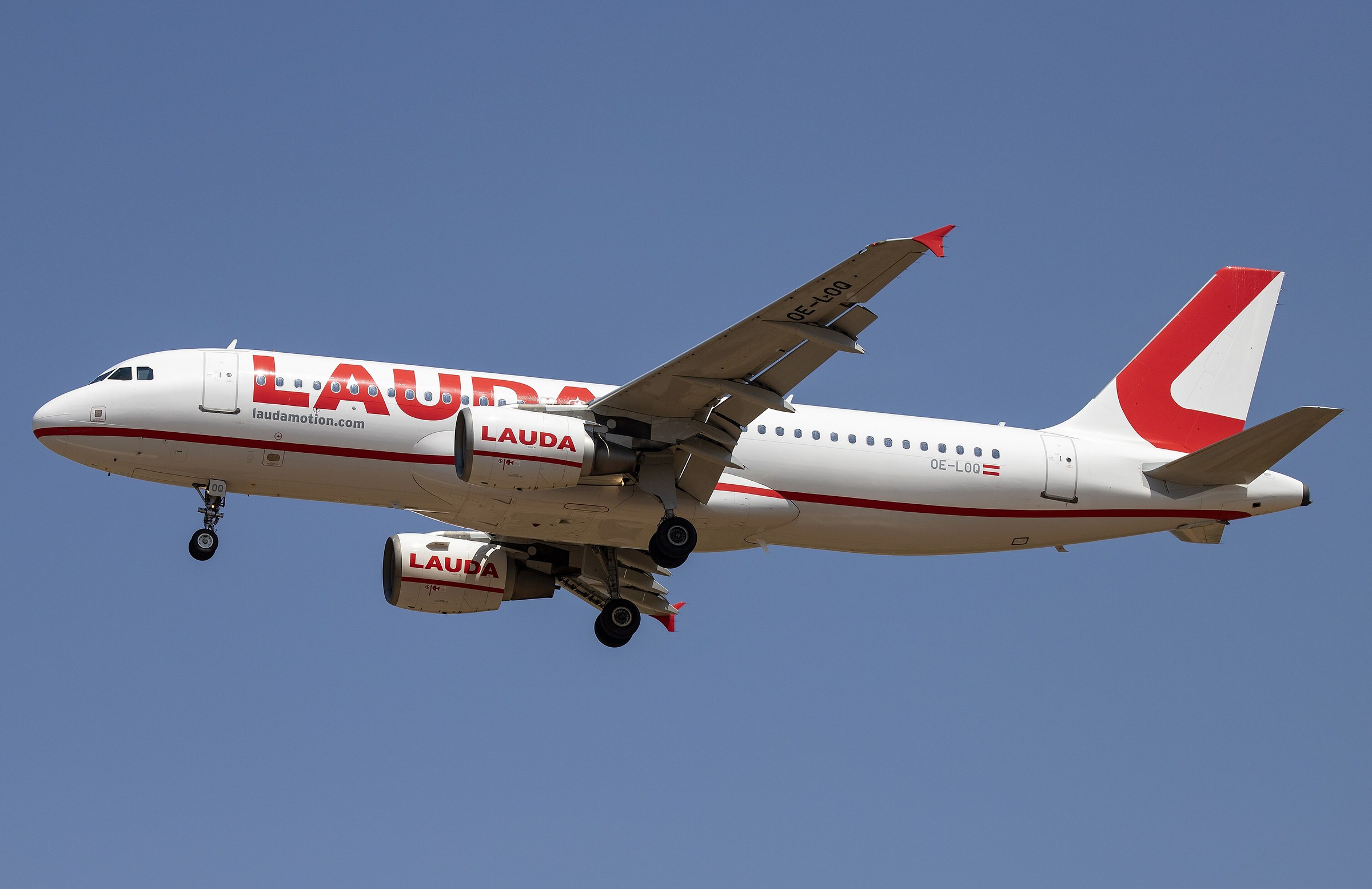
In 2017 Air Berlin became insolvent, and then Niki. In December, after the European Union blocked its sale to Lufthansa, Niki filed for insolvency and stopped flying. When the sale was reopened in Austria, Lauda bid for the airline he had founded; it was his third offer since September. On 23 January 2018 the administrators chose his bid over that of IAG and Vueling. “After the award on 23 January I thought about who would best help me get the new airline off the ground.”
He chose Ryanair, and kept it quiet. By his own account to Die Presse, he had first contacted Michael O’Leary of Ryanair a fortnight before the deal, and a week before it he was still telling the paper that he knew nothing. In March 2018, as Laudamotion took to the air again with Niki’s assets, its first passengers sold through Condor and Thomas Cook and some of its flying done under a wet-lease contract with Eurowings, Lauda announced on board a test flight that Ryanair was taking 24.9 per cent. Ryanair paid nearly €50 million for the stake, about what he had paid for Niki, and added €50 million in start-up funding and six aircraft. The plan was for 21 aircraft, Ryanair’s six among them, and some 40,000 take-off and landing slots. He explained the deal to the same paper.
Ich bin ein Zwerg, der nie aufhört. … Ich behalte das Steuer in der Hand, Laudamotion bleibt österreichisch. … Alleine kann ich nur langsam wachsen.
I’m a dwarf who never stops. … I keep my hands on the controls; Laudamotion stays Austrian. … Alone I can only grow slowly.
From 1 June 2018 Laudamotion sold its seats through Ryanair, its former partners having ended their contracts at the end of May. Ryanair went to 75 per cent at the end of August 2018 and to 100 per cent at the turn of the year, and forecast a loss of about €140 million for the airline’s first year. Lauda stayed on as chairman of the shareholders’ committee.
Lauda died in Zürich 16 months after winning Niki back, on 20 May 2019. Ryanair closed Laudamotion on 19 October 2020. Its Maltese subsidiary, Lauda Europe, carries on the operation, and the name.
VII · The airlines
The airlines, date by date
Founds Lauda Air, starting as a charter airline.
Lauda Air Flight 004, a Boeing 767, crashes in Thailand after taking off from Bangkok; all 223 people on board are killed.
Resigns from the Lauda Air board after a dispute with Austrian Airlines, which takes 99 per cent of the airline in 2001 and the whole company in 2002.
Founds his second airline from the insolvent Aero Lloyd Austria; it flies from November 2003 and takes the name Niki in 2004.
Sells the whole of Niki to Air Berlin.
His company Laudamotion wins the bidding for the insolvent Niki.
Ryanair takes a stake in Laudamotion; by the end of 2018 it owns the airline outright.
Notes
The founding day is 4 April 1979 in the aviation press (aeroTELEGRAPH) and 23 April 1979 in the APA’s chronology. Both agree on the month and on ITAS as partner. ↑
Two BAC One-Elevens leased from Tarom (aeroTELEGRAPH) or two Boeing 737-300s bought in 1985 (the APA’s chronology). The 737-200 shown at the head of this chapter was flying for the airline by March 1986. ↑
Sources
Aircraft Accident Investigation Committee, Ministry of Transport and Communications, Kingdom of Thailand, Lauda Air Luftfahrt Aktiengesellschaft Boeing 767-300ER OE-LAV, Ban Dan Chang District, Suphan Buri Province, Thailand, 26 May 1991, report dated 21 July 1993. faa.gov
“Vier Airlines in 40 Jahren gegründet und verkauft”, APA chronology with the obituary “Niki Lauda ist tot”, Industriemagazin, 21 May 2019. industriemagazin.at
“Wie Niki Lauda Airline um Airline gründete”, aeroTELEGRAPH, 2024. aerotelegraph.com
“Lauda Air Luftfahrt AG”, AEIOU, Austria-Forum. austria-forum.org
“Reden wir über Geld: Niki Lauda – ‚Was sind überhaupt Freunde?‘”, Süddeutsche Zeitung, 9 July 2010. sueddeutsche.de
“More Than 200 Believed Killed As Plane Crashes in Thai Jungle”, 27 May 1991, and “Owner Rejects Thrust as Cause of Air Crash”, 7 June 1991, The New York Times. nytimes.com
“Schreckliche Bürde”, Der Spiegel 23/1991, 2 June 1991, and “Sturzflug über 29 Sekunden”, Der Spiegel 24/1991, 9 June 1991. spiegel.de
Niki Lauda as told to Maurice Hamilton, “People had lost their loved ones yet no one was telling them why”, Observer Sport Monthly, 29 October 2006. theguardian.com
Alan Henry, “Niki Lauda: The years of the Rat”, Motor Sport, March 2009. motorsportmagazine.com
Markus Dobrozemsky, interview with Patrick Huber, “Interview mit Buchautor zu Lauda Air Absturz”, Austrian Wings, May 2026, on Patrick Huber, Lauda Air NG 004: Der letzte Flug der „Mozart“ (January 2026). austrianwings.info
Niklas Varga, “Lauda Air Absturz: Fehler lag auch bei Airline”, noe.ORF.at, 26 May 2026. orf.at
Andrew Clark, “Niki Lauda: ‘racing is the opposite of flying’”, The Guardian, 6 November 2004. theguardian.com
“Lauda confirmed as CEO of Premier Performance Division”, grandprix.com, 6 February 2001. grandprix.com
“Air Berlin stockt Anteile an Niki Laudas Fluggesellschaft auf”, 5 July 2010, and “Ryanair übernimmt alle Anteile von Laudamotion”, 29 January 2019, Spiegel Online. spiegel.de
“Niki Lauda buys back Niki Air assets”, Deutsche Welle, 23 January 2018. dw.com
“Niki Lauda verkauft wieder – an Ryanair: ‚Ich bin ein Zwerg, der nie aufhört‘”, Die Presse, March 2018. diepresse.com
“Toni Faber: Niki Lauda hatte ein ‚weites Herz‘”, religion.ORF.at and Kathpress, 21 May 2019. orf.at
“Niki war ein Stern”, Der Standard, May 2019. derstandard.at
Heike Kossdorff, Thomas Mudri and Daniel Winkler, Niki Lauda – Alles unter einer Kappe (Styria, 2009), publisher’s sample.